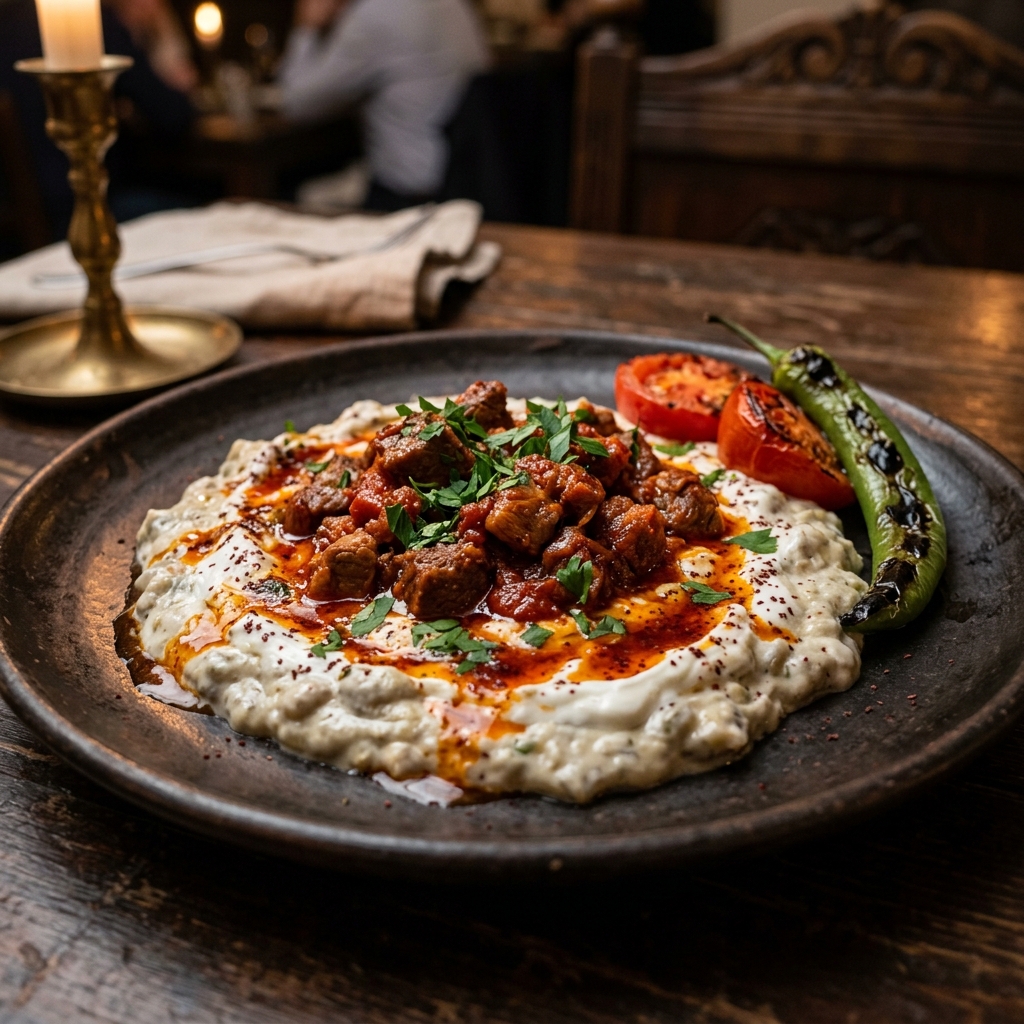
What Is Ali Nazik?
Ali Nazik — a dish from the kebab heartland of Gaziantep in southeastern Turkey — is a masterpiece of contrasting textures and flavors: a bed of smoky, garlicky yogurt-eggplant purée topped with tender pieces of sautéed lamb or beef, finished with a drizzle of spiced butter. Its name, which translates loosely as “gentle Ali” or “delicate Ali,” belies the boldness and complexity of its flavors, and its origins speak to the extraordinary culinary tradition of Gaziantep — the city often called the gastronomic capital of Turkey.
Gaziantep: Turkey’s Culinary Capital
To understand Ali Nazik, one must understand Gaziantep — a city in southeastern Turkey near the Syrian border that has been continuously inhabited for thousands of years and whose culinary tradition is among the richest and most sophisticated in the entire country. Gaziantep has been awarded UNESCO Creative City of Gastronomy status, recognizing its extraordinary food culture that blends Turkish, Arab, Kurdish, and Armenian influences into a distinctive regional cuisine of remarkable depth.
The city’s kebab tradition in particular is legendary. Gaziantep kebab masters are known throughout Turkey for their mastery of meat preparation, spicing, and grilling technique. Ali Nazik represents this tradition at its most refined — not just meat on a skewer, but a composed dish in which every element is designed to complement and enhance the others.
The Smoky Purée: The Soul of the Dish
The foundation of Ali Nazik is the eggplant-yogurt purée — a preparation that requires the same commitment to smoke as Hünkar Beğendi. The eggplants must be charred directly over flame until completely blackened, the flesh inside becoming completely soft and infused with a deep, complex smokiness. Once peeled and squeezed of excess liquid, the eggplant flesh is mixed with thick, creamy yogurt — ideally the strained süzme yoğurt — garlic, salt, and sometimes a touch of lemon juice, creating a purée that is simultaneously smoky, tangy, cool, and deeply savory.
This purée is the genius of Ali Nazik — the way it bridges the gap between the richness of the meat above it and the acidity and coolness of the yogurt, creating a base that can hold and enhance both elements while contributing its own distinctive smoky character.
The Meat and the Butter
Placed atop the purée is the sautéed meat — typically lamb or beef, cut into small pieces and cooked in butter with onions and tomatoes until deeply flavored and tender. The butter used for finishing is infused with red pepper flakes or paprika, creating a vivid red drizzle that is poured over the completed dish — a final element of both flavor and visual drama.
Ali Nazik’s Place in Turkish Cuisine
Ali Nazik occupies a special place in Turkish cuisine as an example of how the southeast’s kebab culture intersects with the broader Ottoman tradition of eggplant cookery. It is a dish that appears at weddings, at celebration dinners, and in the finest kebab restaurants of Gaziantep and Istanbul alike. To eat Ali Nazik in Gaziantep — where the eggplants come from local farms and the yogurt is made from the milk of sheep grazing on the Anatolian plateau — is to experience a dish in its fullest, most authentic form.
📊 Nutrition per Serving
* Approximate values per serving. Recipe makes ~4 servings. Values may vary by ingredients used.
Ingredients
For the eggplant purée base:
- 2 large eggplants
- 1 cup thick yogurt (preferably strained or Greek yogurt)
- 2 cloves garlic, minced
- Salt to taste
For the meat topping:
- 300g ground lamb or beef
- 1 tablespoon butter or olive oil
- 1 onion, finely chopped
- 1 teaspoon paprika
- Salt and black pepper to taste
Optional Garnish:
- Fresh parsley, chopped
- A drizzle of melted butter with red pepper flakes
Instructions
- Roast the Eggplants:
Roast the eggplants directly over a gas flame or in the oven until skin is charred and flesh is soft. Let cool slightly, then peel and mash the insides. - Prepare the Yogurt Base:
In a bowl, mix the mashed eggplant with yogurt, minced garlic, and salt. Stir until smooth and creamy. Spread onto a serving plate. - Cook the Meat:
In a pan, heat butter or olive oil. Sauté chopped onion until soft. Add ground meat, cook until browned. Season with paprika, salt, and pepper. - Assemble the Dish:
Spoon the hot meat mixture over the eggplant-yogurt base. Optionally drizzle with melted butter mixed with red pepper flakes. - Serve Warm:
Garnish with parsley and serve immediately with warm pita or lavash bread.
The Gentle Ali of Gaziantep
Ali Nazik is Gaziantep aristocracy: char-roasted eggplant beaten with garlicky yogurt into a warm smoky cream, blanketed with butter-seared lamb. The name is folk-etymologized as “gentle Ali” or from nazik (kind, refined) — and legend inevitably drags a sultan through Antep to bestow the compliment. Whatever the truth, the dish earns the adjective: it’s among the most velvet things that can happen to an eggplant.
Two Temperatures, One Plate
Ali Nazik’s quiet difficulty is that its base is warm yogurt — and yogurt plus heat usually ends in curds. The move: beat the yogurt into the still-warm (not scorching) smoked eggplant off the heat, so it lands at body temperature, then let the sizzling meat and butter provide the drama from above. Cold yogurt kills the dish; boiled yogurt splits it; warm is the entire art.
Ali Nazik FAQ
Minced or cubed meat on top?
Antep does both: kuşbaşı (small lamb cubes) for occasions, seasoned mince for weeknights. Either way, seared hard in butter with its juices spooned over the cream.
What’s the difference from hünkar beğendi?
Same smoky-eggplant instinct, different riches: beğendi is a cheesy béchamel (palace, Bursa lineage), Ali Nazik is yogurt and garlic (Antep, southeastern soul). Taste both and pick your province.
Part of a bigger guide. This recipe also appears in our guide to Turkish eggplant dishes and Turkish kebabs — where you can see how it fits alongside everything else on the table.


Leave a Reply