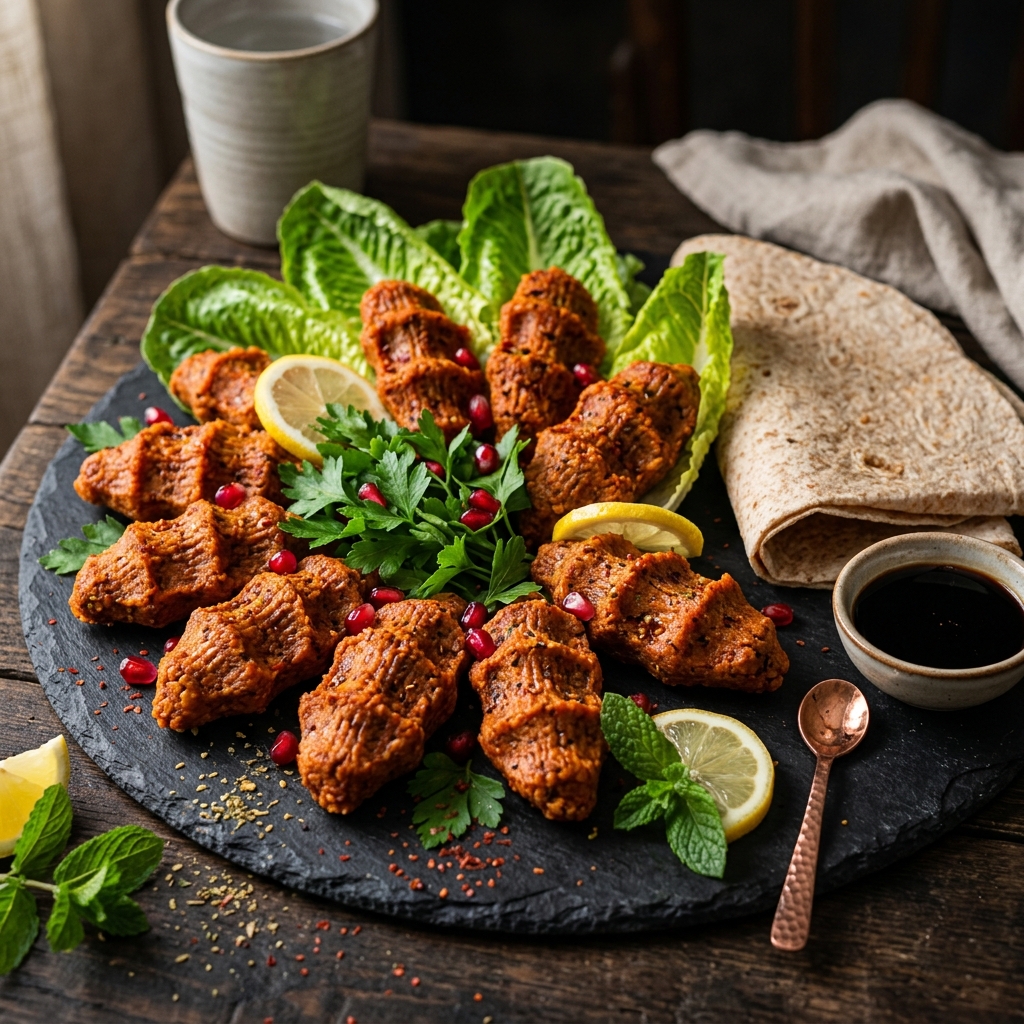
What Is Çiğ Köfte?
Few dishes in Turkish cuisine have a story as extraordinary as çiğ köfte — a dish whose very name means “raw meatball” but which, in its most widely consumed modern form, contains no meat at all. This paradox encapsulates one of the most fascinating transformations in Turkish culinary history: a dish that began as a preparation of raw lamb in the ancient kitchens of southeastern Anatolia and evolved, over centuries, into a beloved vegan street food eaten by millions of Turks every day.
Ancient Origins: Urfa and the Raw Meat Tradition
The origins of çiğ köfte lie in the ancient city of Şanlıurfa in southeastern Turkey — one of the oldest continuously inhabited cities in the world, with human settlement dating back over ten thousand years. In the traditional version of the dish, finely ground raw lamb is kneaded intensively with bulgur wheat, onion, tomato paste, and an extraordinary quantity of spices — including isot (a local smoked dried pepper), cumin, black pepper, and others — until the heat generated by the kneading process effectively “cooks” the meat through friction and the antimicrobial action of the spices and salt.
This technique reflects the resourcefulness of ancient cooking: in a time before reliable fuel for cooking fires, the discovery that meat could be made safe and delicious through intensive spicing and kneading represented genuine culinary ingenuity. The tradition of making raw meat çiğ köfte is still practiced in some homes in Urfa, where it is considered a test of skill and a point of regional pride.
The Modern Transformation: From Meat to Plant
The widely consumed version of çiğ köfte today contains no meat — only fine bulgur wheat, tomato paste, onion, and a blend of spices, kneaded together with pomegranate molasses and lemon juice until the bulgur softens and the mixture becomes a cohesive, richly flavored dough. This transformation happened gradually through the 20th century, partly due to food safety regulations restricting the sale of raw meat preparations, and partly because the plant-based version proved so popular that it eventually overtook the original.
The modern çiğ köfte is intensely flavored, slightly spicy, with the characteristic tang of pomegranate molasses and the earthiness of bulgur. It is rolled into small oval shapes and served wrapped in a lettuce leaf with a squeeze of lemon — a package of flavor that is as satisfying as it is simple.
Çiğ Köfte as Street Food Phenomenon
Today, çiğ köfte is one of the most ubiquitous street foods in Turkey. Small shops — often brightly colored, always crowded — sell it by weight across the country, from Istanbul’s busiest neighborhoods to the smallest Anatolian towns. It is eaten standing at the counter, wrapped in lavash bread with fresh herbs, pomegranate, and lemon, rolled into a package that can be consumed in minutes. It is cheap, filling, healthy, and addictive — a street food success story of the highest order.
For a very different bulgur dish from the same region, try analı kızlı — stuffed köfte in a chickpea broth.
📊 Nutrition per Serving
* Approximate values per serving. Recipe makes ~4 servings. Values may vary by ingredients used.
Ingredients
- 2.5 cups fine brown bulgur
- 2 cups hot water
- 1 onion, finely grated
- 3 cloves garlic, minced
- 2 tbsp tomato paste
- 3 tbsp red pepper paste
- 1/2 cup isot pepper (urfa biber)
- 1/2 cup olive oil
- 3 tbsp pomegranate molasses
- 1 cup finely crushed walnuts
- Juice of 1 lemon
- Fresh parsley, finely chopped
- Salt, cumin
Instructions
- Soak the bulgur in hot water for 15 minutes.
- Squeeze the juice out of the grated onion. Discard the juice.
- In a special kneading tray with ridges, mix the bulgur, onion, garlic, tomato paste, pepper paste, and all spices.
- Knead vigorously for at least 30-40 minutes. Add olive oil and pomegranate molasses gradually during the process.
- Once the mixture is soft and sticks together like a dough, add walnuts and parsley. Knead for another 5 minutes.
- Take walnut-sized pieces and squeeze them in your palm to give them their distinct ribbed shape.
- Serve with lettuce leaves, lemon wedges, and extra pomegranate molasses.
From Raw Meat to Vegan Street Star
Çiğ köfte means “raw meatball,” and for centuries in Urfa and Adıyaman that’s exactly what it was — raw lamb and fine bulgur kneaded for hours with isot pepper until the meat “cooked” in the spice and friction. When Turkey banned the commercial sale of raw-meat çiğ köfte in the late 2000s, the meatless version didn’t just survive, it conquered: today the vegan bulgur çiğ köfte is a national street food, sold from thousands of shops, and it’s what this recipe makes. The meaty original lives on in homes, reserved for trusted tables.
The Knead Is Everything
There is no heat in this recipe — the knead is the cooking. Twenty to thirty minutes of pressing, squeezing and dragging the mixture lets the fine bulgur drink the tomato and pepper pastes and soften from gritty to velvet. Wet your hands with water spiked with pomegranate molasses as you go. When a pinch holds its shape without crumbling and the colour has darkened to brick, it’s done.
Fixing Dry, Sticky or Bland Çiğ Köfte
- Dry and crumbly: more tomato paste and a splash of the molasses-water; keep kneading — dryness is usually impatience.
- Sticky: let it rest 15 minutes so the bulgur catches up, then knead in a spoonful more fine bulgur if needed.
- Bland: salt and isot in small additions, tasting as you go — bulgur swallows seasoning quietly.
How It’s Eaten
Press a köfte into a crisp lettuce leaf, squeeze lemon over it, fold and eat — that’s the classic. The street version comes as a dürüm in lavash with extra greens. Either way, the drink is non-negotiable for purists: sour red şalgam suyu, or ayran if you need mercy from the isot.
Çiğ Köfte FAQ
Is there meat in this recipe?
No. This is the vegan bulgur version that became Turkey's street food standard after the commercial sale of raw-meat çiğ köfte was restricted. The meaty original survives in homes, reserved for trusted tables.
How long do I really need to knead it?
Twenty to thirty minutes. There is no heat in this recipe — the knead is the cooking. Stop when a pinch holds its shape without crumbling and the colour has darkened to brick.
It is dry and crumbly. What now?
More tomato paste and a splash of water spiked with pomegranate molasses, then keep kneading. Dryness in çiğ köfte is almost always impatience rather than a missing ingredient.
Part of a bigger guide. This recipe also appears in our guide to Turkish köfte, Turkish meze and Turkish street food — where you can see how it fits alongside everything else on the table.


Leave a Reply