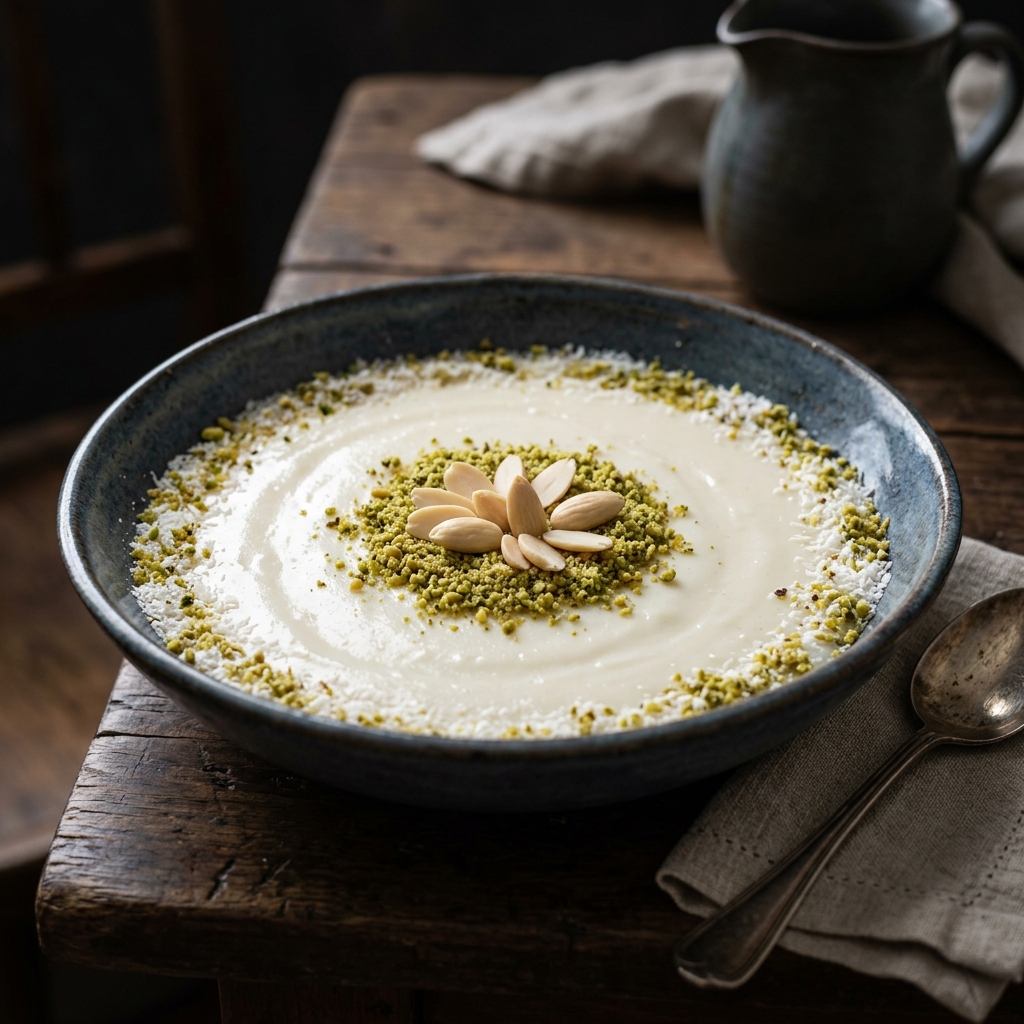
What Is Keşkül?
Keşkül is the most elegant of all the Ottoman milk puddings — a silky, almond-enriched dessert of pure white that is at once simple and sophisticated, delicate and deeply satisfying. Its name comes from the Turkish word for the begging bowl (keşkül) carried by Sufi dervishes on their spiritual journeys, and this etymology speaks to the dessert’s place in Turkish cultural life: it is a food associated with generosity, sharing, and the spiritual dimensions of nourishment.
The Dervish Connection
The association between keşkül and Sufi culture is more than etymological. In the lodges (tekke) of the great Sufi orders — the Mevlevi, the Bektashi, the Halveti — cooking and eating were understood as spiritual practices, and certain dishes held particular significance in lodge culture. Sweet milk preparations were made and distributed on religious occasions and festivals, and keşkül — a nourishing, gentle, easily digestible pudding made from the most wholesome of ingredients — was among the desserts most closely associated with the generous spirit of the Sufi tradition.
Almonds: The Defining Ingredient
What distinguishes keşkül from other Ottoman milk puddings is the generous use of almonds — ground into a fine paste that is incorporated into the pudding, giving it a subtly nutty flavor and an exceptionally silky texture. Almonds were among the most prized ingredients in Ottoman palace cooking, imported from across the empire and used in both savory and sweet preparations as a marker of luxury and refinement.
The almond paste in keşkül serves both flavor and textural functions: it enriches the pudding with a delicate nuttiness that complements the sweetness of the milk and sugar, and it gives the pudding a smooth, slightly dense quality that distinguishes it from the lighter, more neutral sütlaç. The combination of milk, sugar, rice flour, and almond creates a pudding of extraordinary harmony — each element contributing to a whole that is quietly, persistently delicious.
Keşkül Today
Today, keşkül is a fixture of Istanbul’s beloved muhallebici shops — the milk pudding establishments that have served as the city’s dessert cafés for centuries. It is served cold in individual cups or bowls, garnished with slivered almonds, ground pistachios, or dried coconut, its pure white surface offering a canvas for these simple decorative elements. It is a dessert that rewards quiet attention — each spoonful revealing a little more of its subtle complexity. In a culinary world that often prizes boldness and spectacle, keşkül stands as a reminder that the most refined pleasures are often the quietest ones.
For a cheese-based cousin from the Marmara region, see höşmerim.
For the lightest member of the Turkish milk-pudding family, try Mudurnu’s su muhallebisi.
📊 Nutrition per Serving
* Approximate values per serving. Recipe makes ~6 servings. Values may vary by ingredients used.
Ingredients
- 4 cups milk
- 1 cup sugar
- 1/2 cup almond meal (finely ground almonds)
- 3 tbsp rice flour
- 1 tbsp cornstarch
- 1 egg yolk
- 1 tsp vanilla extract
- Garnish: shredded coconut, pistachios, slivered almonds
Instructions
- In a large pot, whisk together the cold milk, sugar, almond meal, rice flour, cornstarch, and egg yolk.
- Place the pot over medium heat and cook, whisking continuously, to prevent lumps.
- When the pudding boils and thickens, remove it from the heat.
- Stir in the vanilla extract.
- Pour the hot pudding into individual serving bowls.
- Allow to cool to room temperature, then refrigerate until completely chilled and set.
- Before serving, generously garnish the tops with shredded coconut, chopped pistachios, and slivered almonds.
From Dervish Bowls to Palace Tables
The name comes from keşkül-ü fukara — “the beggar’s bowl” — the coconut-shell vessel wandering dervishes carried, into which the charitable dropped whatever food they could spare. Somewhere along the way the humble bowl gave its name to one of the most refined puddings of the Ottoman kitchen: silky milk custard perfumed with ground almonds. The irony of a beggar’s bowl becoming palace food is very Istanbul.
Getting the Almond Flavor Right
Keşkül lives on real almonds — blanched, skinned and ground fine enough to melt into the milk. A few drops of almond extract can reinforce them, but extract alone gives you marzipan-flavored cornstarch, not keşkül. Grind the almonds with a spoonful of the sugar to keep them from turning oily, and strain the pudding if you want the texture completely seamless.
Keşkül FAQ
My pudding came out thin — can I save it?
Return it to the pot, whisk in another spoon of cornstarch dissolved in cold milk, and cook two more minutes at a gentle bubble. It sets further as it chills.
What goes on top?
Tradition says ground pistachio and a little shredded coconut — a quiet nod to the coconut bowl that named the dish.
Part of a bigger guide. This recipe also appears in our guide to Turkish desserts and vegetarian Turkish cooking — where you can see how it fits alongside everything else on the table.


Leave a Reply