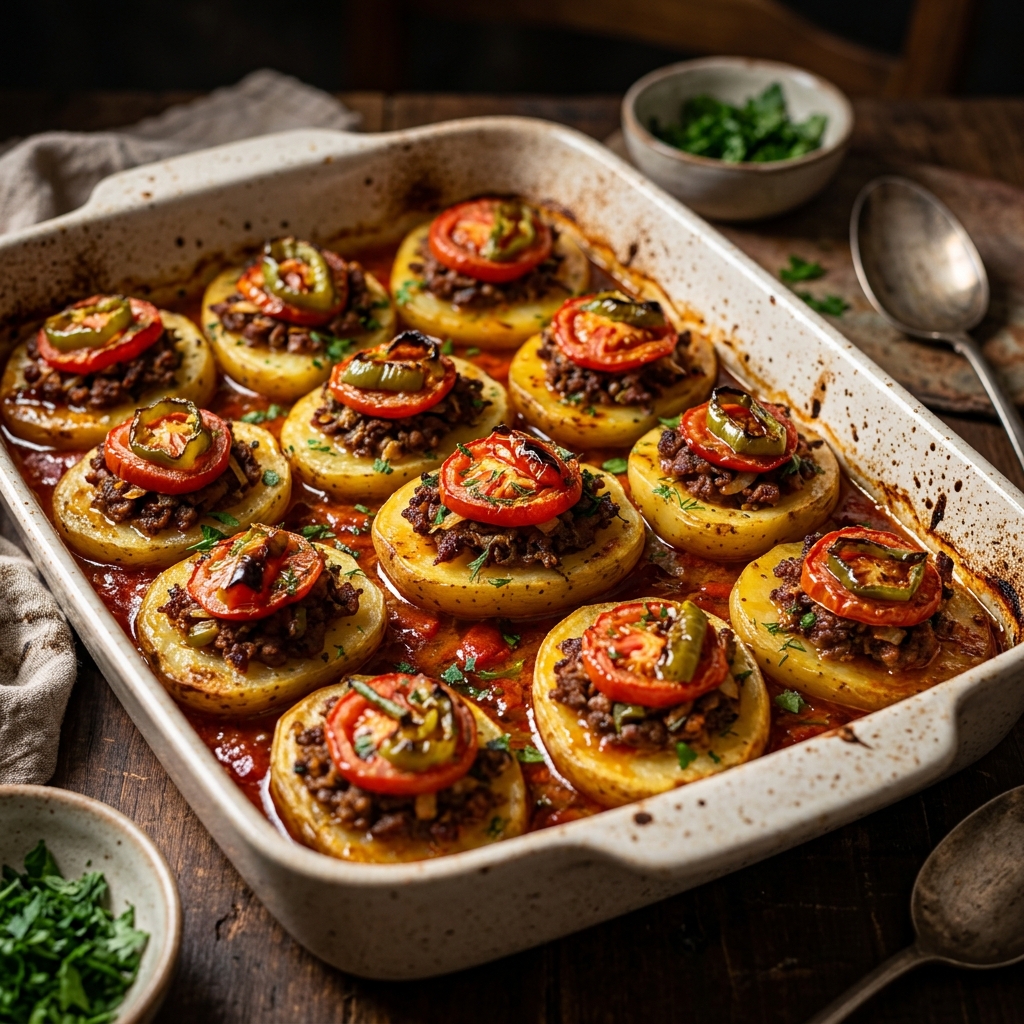
What Is Patates Oturtma?
Patates oturtma — seated potatoes — is one of the most comforting and deeply satisfying dishes in Turkish home cooking: whole or halved potatoes cooked in a rich sauce with minced meat and spices until completely tender, the potatoes absorbing the flavors of the meat and sauce to become something far more interesting than their humble origins would suggest. The name — “seated” potatoes — refers to the way the potatoes sit nestled in the sauce, upright and arranged, giving the dish a pleasing visual organization.
The Potato in Turkish Cuisine
The potato arrived in Turkey — as throughout the Old World — as a result of the Columbian Exchange, introduced from the Americas via Europe in the 17th and 18th centuries. Like tomatoes before them, potatoes were initially regarded with suspicion in Ottoman culinary culture before being gradually accepted and eventually embraced as a versatile, filling, and economical food crop that could grow in the varied climates and soils of Anatolia.
By the 19th century, potatoes had become thoroughly integrated into Turkish cooking, appearing in soups, stews, pilaf variations, börek fillings, and dishes like patates oturtma that use the potato as the primary vehicle for a spiced meat sauce. The potato’s ability to absorb surrounding flavors while providing a neutral, starchy base makes it the perfect partner for the rich, spiced preparations that characterize Turkish cooking.
The Dish: Humble Ingredients, Rich Result
Patates oturtma is the kind of dish that demonstrates the central Turkish culinary principle that humble ingredients, treated with care and patience, can produce results of genuine satisfaction. The potatoes — waxy varieties that hold their shape during long cooking — are arranged in a heavy pan with minced meat, onion, tomato paste, and spices, and cooked slowly over a gentle heat or in the oven until everything is tender and the sauce has reduced to a rich, concentrated coating. It is served with yogurt and bread — a complete meal of great contentment.
📊 Nutrition per Serving
* Approximate values per serving. Recipe makes ~4 servings. Values may vary by ingredients used.
Ingredients
- 4 large potatoes
- 300g ground beef
- 1 onion, finely chopped
- 2 green peppers, chopped
- 2 tomatoes, diced
- 1 tbsp tomato paste
- 1/2 cup hot water
- Olive oil for frying
- Salt, black pepper, paprika
Instructions
- Peel the potatoes and slice them into thick rounds.
- Lightly fry the potato slices in olive oil until they are half-cooked and slightly golden. Arrange them in a baking dish.
- In a separate pan, sauté the onions and ground beef until the meat is browned.
- Add the green peppers, tomatoes, tomato paste, water, and spices. Simmer for 10 minutes to create a thick meat sauce.
- Pour the meat sauce evenly over the layered potatoes in the baking dish.
- Bake at 180°C (350°F) for 20-25 minutes until the potatoes are completely tender and the top is slightly browned.
- Serve hot.
The “Sitting” Dish Family
Oturtma means “made to sit” — a family of Anatolian dishes where sliced vegetables are settled into a pan, topped with seasoned ground meat, and left to sit quietly under tomato sauce in the oven. The eggplant version is the famous elder; this potato version is the one children actually cheer for. Same architecture as musakka, but with everything staying respectfully in its place instead of mingling.
The Potato Question: Fry First or Not?
Tradition par-fries the potato slices before they take their seats — it seals the surface so they hold shape and adds flavor no oven can. The lighter route (a brush of oil and a hot tray in the oven) genuinely works and makes the dish weeknight-honest. What you cannot skip is salting the potatoes and letting the slices dry; wet potatoes steam and break.
How It’s Served
Oturtma comes to the table in its cooking dish, sauce still murmuring, with rice pilavı and a bowl of cold yogurt standing by. The yogurt isn’t garnish — the hot-tomato-meets-cold-yogurt exchange is the point of the whole genre.
Patates Oturtma FAQ
Do I have to fry the potatoes first?
Traditionally yes — par-frying seals the slices so they hold shape and adds flavour the oven cannot. A brush of oil and a hot tray is a legitimate lighter route, but do not skip salting and drying the slices first.
Why did my potatoes break apart?
They went in wet. Salt the slices, let them weep, then dry them properly — wet potatoes steam and collapse.
What do you serve with it?
Rice pilavı and a bowl of cold yogurt. The hot-tomato-against-cold-yogurt contrast is the point of the whole oturtma genre.
For the street-food take on the same idea, Istanbul's kumpir whips butter and cheese into the potato before the toppings even arrive.


Leave a Reply