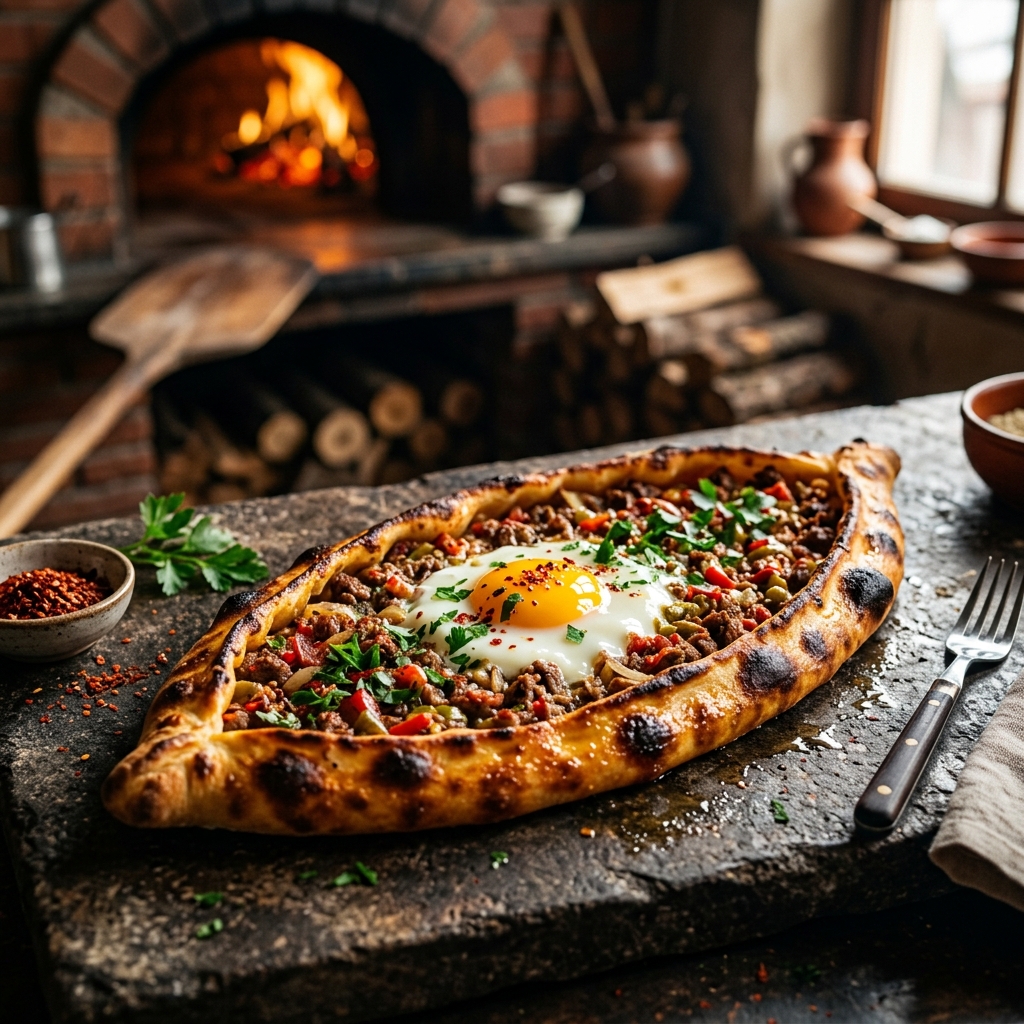
What Is Pide?
Pide is the foundational bread of Turkish cuisine — a leavened flatbread of oval or round form, slightly thicker and softer than lavash, with a characteristic chewiness and warmth that makes it the perfect accompaniment to virtually every Turkish dish. But pide is also the name of Turkey’s great filled bread — boat-shaped pastries topped with cheese, egg, meat, or vegetables, cooked in a stone oven until the exterior is golden and the filling is bubbling. Understanding pide means understanding something essential about Turkish bread culture.
Bread in Ottoman Culture
In Ottoman culture, bread was not merely food but a near-sacred substance — to waste bread was considered sinful, and old bread was set aside on the street for others to take, never thrown in the trash. The Ottoman Empire maintained elaborate systems for bread production and distribution: official bakers (ekmekçiler) operated under strict guild regulations, bread prices were controlled by the state, and the quality of bread was considered a matter of public welfare.
Pide occupied a special position in this bread culture as a festive or ceremonial bread — particularly significant during Ramadan, when Ramazan pidesi (Ramadan pide) is baked fresh daily and consumed as the bread of the iftar meal that breaks the fast. This tradition continues today, with bakeries across Turkey producing vast quantities of Ramazan pidesi throughout the holy month — stamped with distinctive geometric patterns and carried home wrapped in paper, filling the streets with the irresistible aroma of fresh bread.
Filled Pide: A Complete Meal
The boat-shaped filled pide represents a different tradition — closer to the Turkish concept of a pizza, though considerably older. The dough is shaped into an elongated oval, the edges folded up to contain the filling, and the whole baked in a stone oven. Classic fillings include kaşarlı pide (with kaşar cheese), kuşbaşılı pide (with diced lamb), kıymalı yumurtalı pide (with minced meat and egg), and karışık pide (mixed). Each region of Turkey has its own pide traditions and preferred fillings, reflecting local ingredients and tastes.
The Karadeniz (Black Sea) region is particularly famous for its pide — especially the Trabzon pidesi and Samsun pidesi, which have their own distinctive shapes, dough styles, and fillings that differ significantly from the versions found in central or western Turkey. This regional diversity makes pide one of the most revealing windows into Turkey’s extraordinary culinary geography.
📊 Nutrition per Serving
* Approximate values per serving. Recipe makes ~4 servings. Values may vary by ingredients used.
Ingredients
For the dough:
- 3 cups all-purpose flour
- 1 cup warm water
- 1 packet (7g) instant yeast
- 1 tablespoon sugar
- 1 teaspoon salt
- 2 tablespoons olive oil
For the topping (example: cheese and parsley)(you can serve anything you want):
- 1 cup shredded mozzarella or Turkish kasar cheese
- 1/4 cup chopped fresh parsley
- Optional: 1 egg (for brushing)
Instructions
- In a bowl, combine warm water, sugar, and yeast. Let it sit 5-10 minutes until foamy.
- Add flour, salt, and olive oil. Knead until a smooth dough forms (about 8-10 minutes).
- Cover and let the dough rise for 1 hour until doubled in size.
- Preheat oven to 220°C (430°F).
- Divide dough into equal balls. Roll each ball into an oval shape about 1/2 cm thick.
- Spread cheese and parsley evenly on the dough, leaving a small border around edges.
- Fold edges slightly inward to form a boat shape.
- Brush edges with beaten egg for a shiny crust (optional).
- Bake for 12-15 minutes until golden and cheese is melted.
- Serve hot.
The Boat-Shaped Institution
Pide is Turkey’s great open-faced bread genre: dough stretched long, loaded, and its edges rolled into the signature boat shape that keeps molten filling aboard. Every region flies its own flag — Samsun’s Bafra pide rolled thin and closed, Trabzon’s butter-heavy versions, Konya’s etli ekmek stretching a meter — and every Turkish town has a pideci whose oven hasn’t cooled since the nineties.
The Classic Fillings, Ranked by Argument
- Kıymalı — spiced mince, the standard-bearer.
- Kuşbaşılı — hand-cut lamb, the connoisseur’s order.
- Kaşarlı — molten cheese, the child’s and therefore everyone’s secret favorite.
- Sucuklu-yumurtalı — sausage and egg, breakfast wearing evening clothes.
- The egg cracked over any pide in its final oven minute is called yumurtalı and is always the right call.
Home Oven, Pideci Results
You can’t match a stone oven’s 400 degrees, but you can cheat toward it: steel or stone preheated a full half hour, oven at its absolute maximum, and the pide baked low in the oven so the base crisps before the rim over-browns. Butter brushed on the hot crust as it exits is the pideci’s farewell gesture — don’t skip it.
Turkish Pide FAQ
Why is my pide pale and soft instead of crisp?
Home ovens rarely reach the temperature a pideci's stone oven does. Preheat a baking steel or stone for a full thirty minutes at maximum, and bake low in the oven so the base crisps before the rim over-browns.
What are the classic fillings?
Spiced mince (kıymalı), hand-cut lamb (kuşbaşılı), melted cheese (kaşarlı) and sausage-and-egg (sucuklu yumurtalı). An egg cracked over any of them in the final minutes is always the right call.
Should the edges be rolled or left flat?
Rolled — that is what makes it a pide rather than a flatbread. The rolled rim keeps molten filling aboard and gives you something to hold.
Part of a bigger guide. This recipe also appears in our guide to Turkish street food and vegetarian Turkish cooking — where you can see how it fits alongside everything else on the table.


Leave a Reply