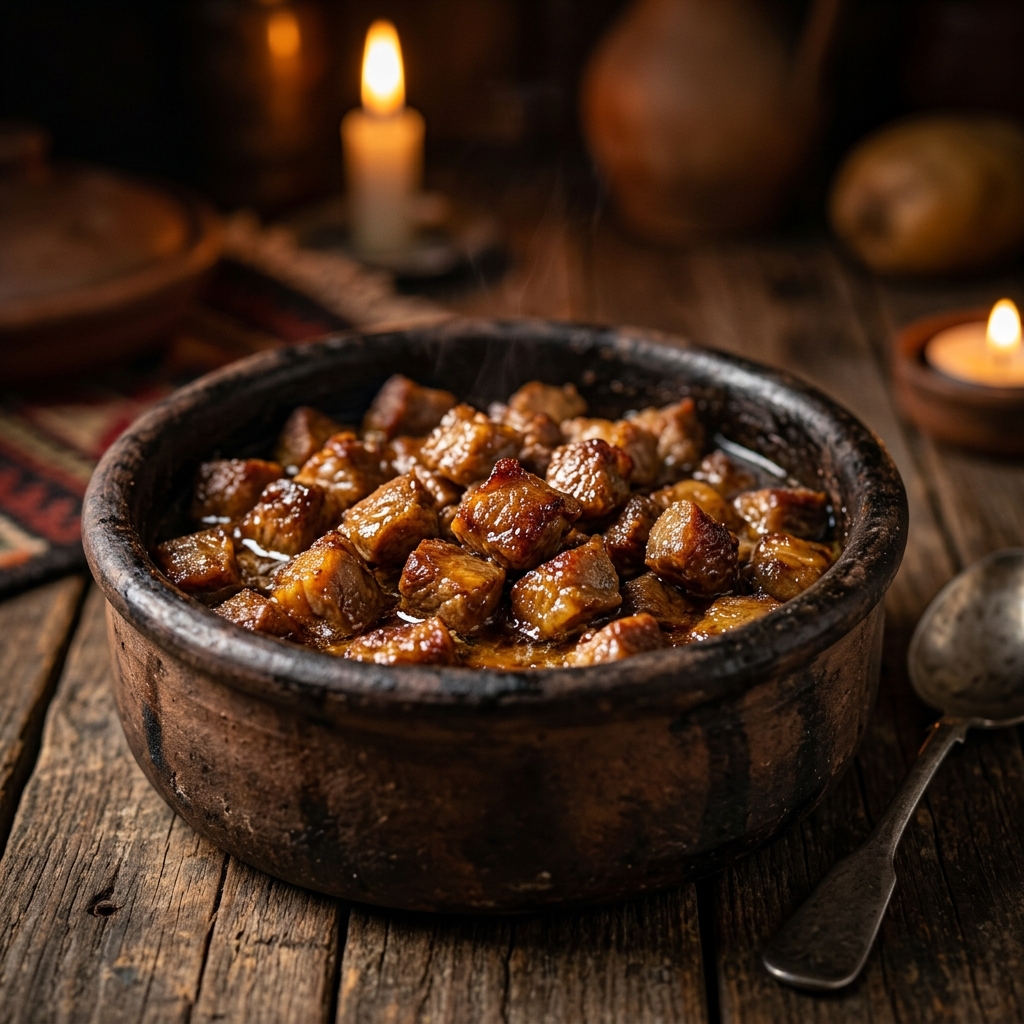
What Is Sivas Kavurma?
Sivas kavurma is the most celebrated regional version of the Turkish kavurma tradition — a slow-cooked preparation of lamb in its own fat that is utterly distinctive in character and deeply representative of the Anatolian highland culinary tradition. From the city of Sivas on the Central Anatolian plateau, this dish demonstrates how a single culinary tradition — the kavurma — can be transformed by regional terroir, livestock breed, and centuries of accumulated culinary knowledge into something entirely its own.
Sivas: Heart of the Anatolian Plateau
Sivas sits at an elevation of over 1,200 meters on the Central Anatolian plateau — a landscape of sweeping grasslands, harsh winters, and a pastoral tradition of sheep-raising that dates back thousands of years. The sheep raised on the highland pastures of Sivas develop a distinctive quality of meat and fat due to their diet of wild grasses, herbs, and mountain plants. This terroir — the specific environmental conditions that shape the character of an agricultural product — gives Sivas lamb a flavor and fat quality that is significantly different from lowland lamb.
The Technique: Slow Rendering
Sivas kavurma is made by a method that is almost meditative in its patience: pieces of lamb — typically leg and shoulder — are placed in a heavy pot with only the fat rendered from the tail and back fat of the same animal. No water, no additional oil — only the fat of the lamb itself, which renders slowly as the meat cooks, creating a medium in which the meat can cook gently for two to three hours until it is completely tender, deeply flavored, and preserved in its own rendered fat.
This technique — essentially confit in the French culinary vocabulary — was developed not merely for flavor but for preservation. In the days before refrigeration, kavurma prepared in this way could be stored for weeks or months in sealed clay pots, the fat preserving the meat from spoilage. The tradition of making kavurma as a winter food store continues in some Anatolian households today, where it is prepared in large quantities in autumn when the sheep are slaughtered.
A Living Tradition
Today, Sivas kavurma is celebrated throughout Turkey as one of the finest regional meat preparations, appearing in restaurants specializing in Anatolian cuisine and sought out by food lovers who make the journey to Sivas specifically to taste it in its authentic home. It represents the Central Anatolian approach to cooking at its most honest and elemental — good meat, good fat, time, and fire.
📊 Nutrition per Serving
* Approximate values per serving. Recipe makes ~4 servings. Values may vary by ingredients used.
Ingredients
- 500 grams lamb meat (cubed)
- 2 tablespoons butter or clarified butter (ghee)
- 1 large onion (finely chopped)
- 2 green peppers (sliced)
- 2 tomatoes (peeled and chopped)
- 2 cloves garlic (minced)
- 1 teaspoon ground black pepper
- 1 teaspoon paprika
- Salt to taste
- Optional: 1 teaspoon dried thyme or oregano
Instructions
- Melt the butter in a large skillet over medium heat.
- Add the chopped onions and sauté until golden brown.
- Add the cubed lamb and cook until browned on all sides.
- Stir in the garlic, green peppers, and tomatoes. Cook for about 10-15 minutes until vegetables soften and meat is tender.
- Season with salt, black pepper, paprika, and optional herbs. Mix well.
- Reduce heat to low, cover, and simmer for another 10 minutes to blend flavors.
- Serve hot with rice or fresh bread.
Category:
- Main Course
- Meat Dishes
- Traditional Dishes
Sivas Kavurma vs. Sac Kavurma
They share a name, not a method. Sac kavurma is fast — high heat, peppers and tomatoes, done in minutes. Sivas kavurma is patient: lamb cooked slowly in its own fat and juices, seasoned with little more than salt, until it nearly falls apart. One is a sear, the other a surrender.
The Old Art of Preserving Meat in Fat
Before refrigerators, Central Anatolian families cooked kavurma in autumn — especially after Kurban Bayramı — and sealed it in jars under its own fat, where it kept through the winter like a Turkish confit. A spoonful straight from the jar, melted over eggs or bulgur pilavı, was winter’s fast food. This recipe is that tradition, scaled to one supper.
Tips from Central Anatolian Kitchens
- Cook covered at first so the meat releases and simmers in its juices, then uncover to let the water drive off and the frying begin — that order is the whole technique.
- Never add water. The meat carries everything it needs.
- Bone-in pieces give the deepest flavour if you have the patience to work around them.
- Underseason while cooking, correct at the end — the juices concentrate as they reduce.
Sivas Kavurma FAQ
Lamb or beef?
Lamb is traditional and richer; beef chuck works but wants a spoon of butter or tail fat to make up the difference.
How long does it keep?
Covered by its own fat in a sealed jar in the fridge, kavurma keeps for weeks — the fat is the lid. Reheat gently and it revives completely.
Part of a bigger guide. This recipe also appears in our guide to Turkish kebabs — where you can see how it fits alongside everything else on the table.


Leave a Reply