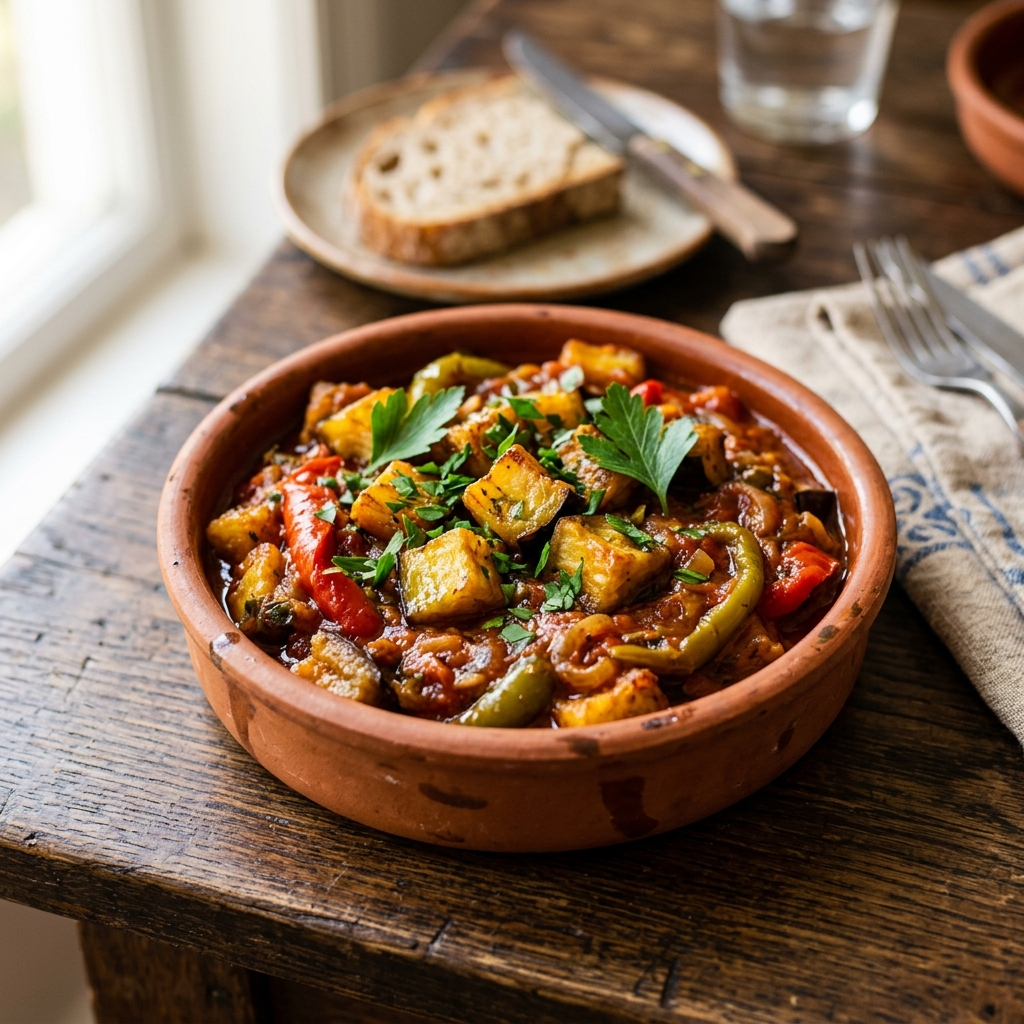
What Is Şakşuka?
Şakşuka is a vivid, deeply flavored vegetable dish of fried eggplant, zucchini, and peppers in a spiced tomato sauce — a preparation that sits at the intersection of the Turkish meze tradition and the broader Mediterranean love of olive oil-based vegetable dishes. Colorful, aromatic, and satisfying, it is a dish that showcases the Turkish genius for transforming humble summer vegetables into something genuinely exciting through the alchemy of good olive oil, fresh tomatoes, and careful seasoning.
Mediterranean and Middle Eastern Connections
Şakşuka belongs to a family of tomato-and-vegetable dishes that appears across the entire Mediterranean and Middle Eastern culinary world under various names — the Israeli shakshouka (eggs poached in spiced tomato sauce), the North African chakchouka, the Turkish şakşuka, and numerous variations in between. The common thread is the combination of vegetables cooked in or with tomato sauce — a preparation made possible by the global spread of tomatoes from the Americas following the 16th-century Columbian Exchange, which transformed the cooking of every culture it touched.
In Turkey, şakşuka developed its own distinctive character through the addition of fried eggplant and zucchini — both signature vegetables of Anatolian and Aegean cooking — and through the use of local spice combinations that give it a slightly different flavor profile from its regional relatives.
The Technique: Frying First
The key to excellent şakşuka is frying the vegetables separately before combining them with the tomato sauce. Each vegetable — eggplant, zucchini, and peppers — is cut into pieces and fried in olive oil until golden and slightly caramelized. This pre-frying develops flavor through the Maillard reaction, giving each vegetable a depth and sweetness that simply simmering them in tomato sauce cannot achieve.
The fried vegetables are then combined with a tomato sauce — made from fresh tomatoes or tomato paste cooked with garlic and spices — and simmered briefly together to allow the flavors to meld. The dish is typically served at room temperature as part of a meze spread, drizzled with a little extra olive oil and garnished with fresh herbs.
Şakşuka Today
Today, şakşuka is a fixture of Turkish meze culture and summer cooking — a versatile dish equally at home as a meze alongside other cold vegetable preparations, as a side dish with grilled meat, or as a light main course with bread and yogurt. Its vibrant colors — the deep purple of fried eggplant, the gold of zucchini, the red of tomato sauce — make it one of the most visually appealing of all Turkish vegetable dishes, a reminder that healthy eating and genuine pleasure need never be in conflict.
📊 Nutrition per Serving
* Approximate values per serving. Recipe makes ~4 servings. Values may vary by ingredients used.
Ingredients
- 2 large eggplants
- 2 green peppers
- 1 zucchini
- 3 large tomatoes, grated
- 3 cloves garlic, minced
- 1 tsp sugar
- Olive oil for frying
- Salt to taste
- Fresh parsley
Instructions
- Cut the eggplants, zucchini, and peppers into small cubes.
- Soak eggplant cubes in salted water for 15 minutes, then drain and pat dry.
- Deep fry the vegetables in batches until golden. Drain on paper towels.
- In a separate pan, heat a little olive oil, add minced garlic and grated tomatoes.
- Add sugar and salt to the tomato sauce and simmer for 10 minutes until thick.
- Mix the fried vegetables into the tomato sauce or pour the sauce over the vegetables.
- Serve cold or at room temperature, garnished with parsley.
Not Shakshuka: A Case of Mistaken Identity
Spelling has caused a thousand disappointed tourists: Turkish şakşuka has no eggs. It’s a meze — cubes of fried eggplant and peppers dressed in a garlicky tomato sauce, served at room temperature — while the egg-poached North African/Levantine shakshuka is a different dish that happens to share the name’s Arabic root (“mixture”). Order şakşuka in Istanbul expecting brunch and you’ll receive, instead, one of the best things ever done to an eggplant.
Frying Eggplant Like a Meyhane Cook
- Salt the cubes, rest, and dry — collapsed cells drink less oil and fry crisper.
- Hot oil, small batches: crowded eggplant steams gray instead of frying gold.
- Drain hard on paper; the sauce should coat the cubes, not merge with their oil.
- A lighter oven-roast works — just roast to genuine bronze, since that caramelization is the flavor.
On the Meze Table
Şakşuka runs with the cold-meze crowd: beside haydari, kısır and white cheese, with warm bread for the sauce. Yogurt on top is a common and excellent regional touch. Like its zeytinyağlı relatives, it tastes fullest at room temperature, a few hours after it’s made.
Şakşuka FAQ
Is this the same as shakshuka with eggs?
No, and the spelling causes constant disappointment. Turkish şakşuka is a room-temperature meze of fried eggplant and peppers in garlicky tomato sauce. The egg-poached dish is a different recipe that shares an Arabic root meaning 'mixture'.
How do I keep the eggplant from drinking all the oil?
Salt the cubes, rest them, dry them, and fry in small batches in properly hot oil. Crowded eggplant steams grey instead of frying gold.
Hot or cold?
Room temperature, like its zeytinyağlı relatives. It tastes fullest a few hours after it is made, with plenty of bread and often a spoon of yogurt on top.
For another summer vegetable meze that fries up in minutes, try mücver — Aegean zucchini fritters.
Part of a bigger guide. This recipe also appears in our guide to Turkish eggplant dishes, Turkish meze and vegetarian Turkish cooking — where you can see how it fits alongside everything else on the table.


Leave a Reply